How Google Maps Rankings Work for Local Businesses
A client called me last year, furious. "We got 20 five-star reviews in two weeks and our ranking dropped." That conversation changed how I think about every Maps optimization I touch. Google doesn't reward enthusiasm—it rewards consistency, and most businesses get that backwards.
Here's what this post delivers: the actual mechanics behind Google Maps rankings, the steps that move the needle, and the friction points nobody warns you about until you've already lost visibility.
What Actually Drives Google Maps Rankings?
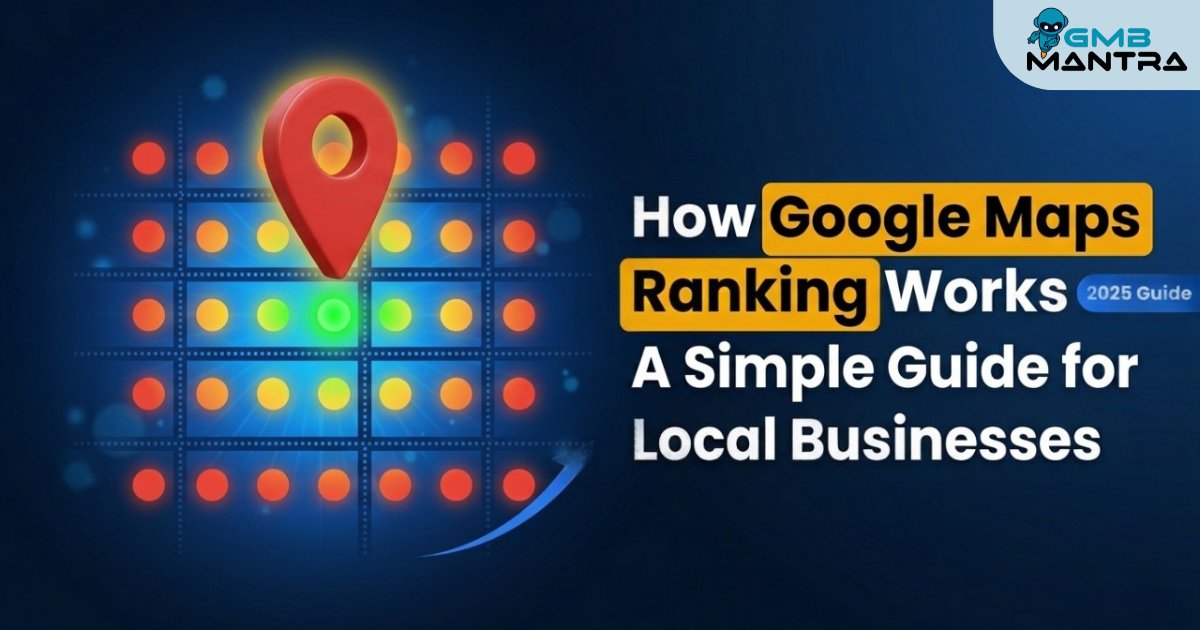
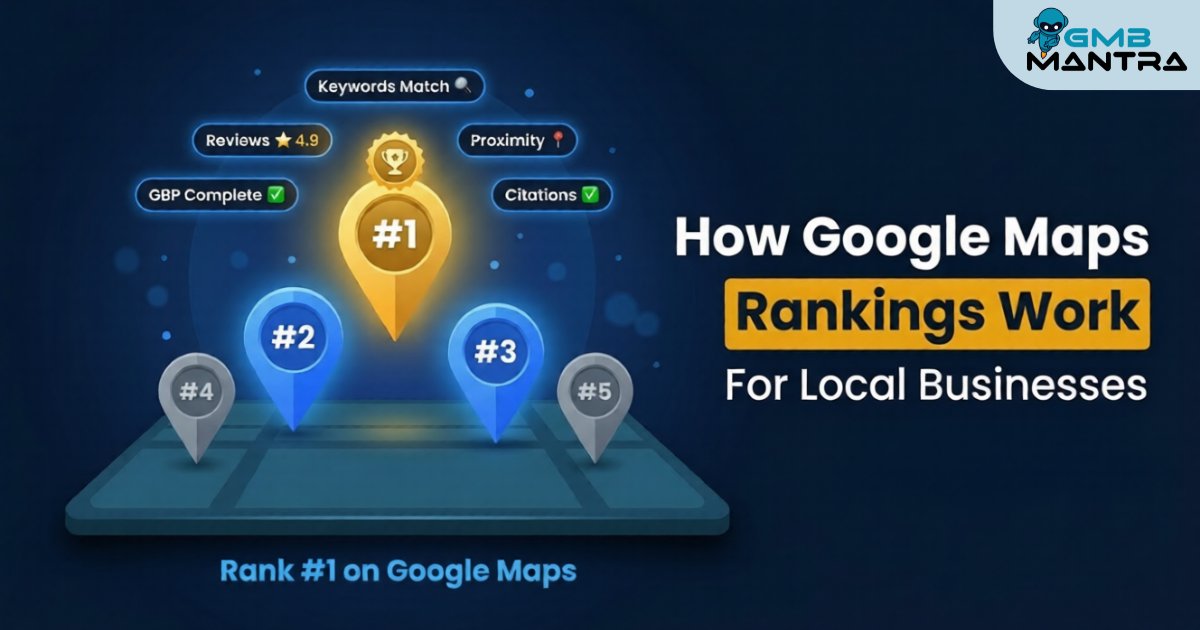
Google Maps rankings for local businesses hinge on three core signals—relevance, proximity, and prominence—filtered through behavioral signals and entity richness across the broader search ecosystem. A fully optimized Google Business Profile with consistent review velocity of at least 2 reviews per month, geotagged photos, and cross-platform NAP uniformity outperforms a profile with hundreds of stale reviews and no recent activity. The algorithm rewards alive businesses, not decorated ones.
Before You Touch Anything: The Decision Matrix
Don't start optimizing until these are locked down:
- NAP consistency verified across Google Maps, Apple Business Connect, Bing Places, and any AI platforms citing your business. If your phone number differs by one digit on Yelp versus your GBP, you're fragmenting your entity before you've begun.
- Website mobile speed under 2 seconds. Pogo-sticking from a slow landing page actively kills your Maps signals. I've watched it happen—a client's calls and direction requests cratered until we hit Core Web Vitals benchmarks.
- Duplicate listings resolved. Categories literally gray out if Google detects NAP conflicts. You'll need a support ticket to untangle this, and that takes days.
Verification Check: Search your exact business name on Google Maps, Apple Maps, and Bing Maps. If the address, phone number, or business name varies anywhere, stop and fix that first. Everything downstream depends on it.
The Guided Execution: Phase by Phase
Phase 1 — Nail Your Categories and Services
Log into your Google Business Profile. Hit the Info tab, then Categories. Your primary category needs to match actual searcher intent—"Coffee Shop" if that's what people search, not just "Restaurant."
Add secondary categories that reflect your real services. This isn't about stuffing; it's about precision.
Visual Checkpoint: You'll see a green checkmark next to "Primary category" with a "Suggested categories" dropdown populated below it.
Verification: Search your primary category + your city in incognito. If your listing appears in the top 20 results, the category alignment is working.
The friction here is real. If your NAP has inconsistencies, categories won't save. I spent three hours troubleshooting a client's missing category options before realizing a duplicate listing from 2019 was blocking everything. Resolve duplicates first.
Phase 2 — Pin Your Location and Lock Openness Signals
Drop your pin precisely on Google Maps. Not "close enough"—precisely. Then update your hours, including holiday specials and seasonal changes.
This matters more than most people realize. A coffee shop client of mine was buried in evening searches until we added the "open late" attribute. That single openness signal change let them outrank chains in after-hours queries.
Visual Checkpoint: Blue pin locks in place with a "Location verified" badge. You'll see a real-time "Open now" indicator when you search during business hours.
Verification: Search "\[your business type\] open now" from a mobile device near your location. You should appear.
Friction Warning: Service-area businesses constantly confuse "service area" settings with the physical pin. If you're an SAB, don't hide your address thinking it helps—it tanks proximity signals unless you compensate with hyperlocal content targeting specific neighborhoods.
Phase 3 — Photos, Posts, and Q&A (The Activity Layer)
Upload a minimum of 10 geotagged photos—interior, exterior, products, team. Not stock images. Google suppresses profiles using generic stock photography; this is non-negotiable for entity richness.
Create posts weekly with clear CTAs. Here's the catch: posts vanish after 7 days if they get zero engagement. So don't just post—drive interaction.
Visual Checkpoint: A photo carousel reading "X new photos" and an "Active post" timer badge on your profile preview.
Verification: Check your GBP Insights for photo views trending upward week over week.
One thing that tripped me up—uploading photos via desktop from a non-local IP address sometimes prevents indexing. Upload from the mobile app with live GPS enabled. I learned this the hard way after a batch of 30 product photos simply never appeared.
Phase 4 — Reviews: Velocity Over Volume
This is where most businesses self-sabotage.
Two new reviews per month, consistently, from local profiles outperforms 20 reviews dumped in a single week. I watched it happen firsthand—that client I mentioned at the top lost their Local Pack position after a review burst because Google flagged the pattern. We rebuilt by spacing reviews naturally, and visibility returned within 24-48 hours once the velocity stabilized from local IP addresses.
Respond to every review. Every single one. Not with copy-paste templates, but with responses that reference specifics from the review. This is where review management through GMBMantra becomes a practical advantage—especially for businesses handling volume across multiple locations. AI-powered sentiment analysis means your responses feel personal without consuming hours of your week.
Visual Checkpoint: Your star rating updates with an "X reviews this month" counter showing a consistent upward trend line.
Verification: Track your review velocity in a spreadsheet or analytics dashboard. Two per month minimum, from diverse profiles (not all 5-stars—mixed ratings actually look more legitimate).
Reviews from non-local profiles get deprioritized. If your cousin in another state leaves a review, it won't carry the same weight as a customer whose Google profile shows local activity. That's the behavioral signal layer at work.
Phase 5 — Website Alignment and Schema
Add your website URL in the Info tab. Then implement LocalBusiness schema on your homepage.
Visual Checkpoint: Run Google's Rich Results Test. You should see a green "Valid LocalBusiness" confirmation in Search Console.
Verification: If your schema shows errors or warnings, your NAP mismatch is likely above the ~5% threshold where Google starts ignoring structured data entirely.
I had a client whose GBP tanked despite doing everything right on the profile side. Cross-referenced their NAP across 50 citations, found a schema mismatch on the website, fixed it—jumped 3 spots in one week. The website and the profile aren't separate things in Google's eyes. They're one entity.
The Numbers That Matter
- Review velocity of 2 reviews/month from local profiles shows Local Pack impact within 24-48 hours.
- Mobile page speed must be under 2 seconds or pogo-sticking degrades your Maps signals.
- NAP mismatches above 5% cause schema to be ignored entirely.
- Posts expire after 7 days without engagement—a silent killer for activity consistency.
- Cross-platform entity validation (Google, Apple, Bing, AI platforms) is now a prerequisite, not a bonus.
Ghost Errors: The Stuff Nobody Documents
Rankings drop after updating hours. This one is bizarre. I'll be honest, I got stuck here too, until I realized the "open now" filter in voice search queries was pulling stale cached data. Testing in incognito after hours updates is mandatory.
Local Pack invisible despite full optimization. Cross-validate your listing on Apple Maps and Bing. The new AI Visibility Score beta (rolling out Q1 2026) tracks citations in ChatGPT and Perplexity. If those platforms can't find your entity, your prominence score suffers even on Google.
Reviews disappearing despite volume. Seed your Q&A section from geo-tagged local profiles. This creates engagement signals that reinforce review legitimacy—a fix sourced from community forums, not any official documentation.
FAQ
Why don't reviews from out-of-town profiles boost my Maps ranking?
Google weights reviewer geolocation heavily. Reviews from profiles showing local activity create stronger behavioral signals than those from distant locations. The algorithm builds a "heat map" of engagement—local reviewers contribute to your proximity and prominence signals simultaneously, while out-of-area reviews get deprioritized in ranking calculations.
How does GBP post expiration affect my Local Pack position?
Posts expire after 7 days without engagement, and this directly impacts your activity consistency score. Google's Q4 2025 dashboard update now surfaces post and review "staleness" metrics. A profile with expired posts signals inactivity, which can suppress your Local Pack visibility even if other signals are strong.
Does Apple Maps validation actually influence Google rankings?
Yes—indirectly but measurably. Cross-platform entity validation strengthens your overall entity richness. One practitioner reported that syncing across Apple and Bing, combined with AI platform citations, doubled their prominence score. Google doesn't exist in a vacuum; it reads your entity's presence across the ecosystem.
What kills review velocity after an initial burst?
Monotony and inauthenticity. All 5-star reviews with no text look manufactured. Google deprioritizes them. The fix is diversity—mixed ratings, detailed review text, and steady pacing. Two authentic reviews monthly beats a one-time flood of perfect scores every time.
So here's the real question: are you tracking your review velocity and citation health right now, or are you guessing? Because the businesses climbing the Local Pack aren't guessing. They're measuring. Tools like GMBMantra exist specifically for this—rank tracking, citation management, competitor analysis, and review analytics from one dashboard. Start there.