Beginner’s Guide to Google Business Profile Optimization
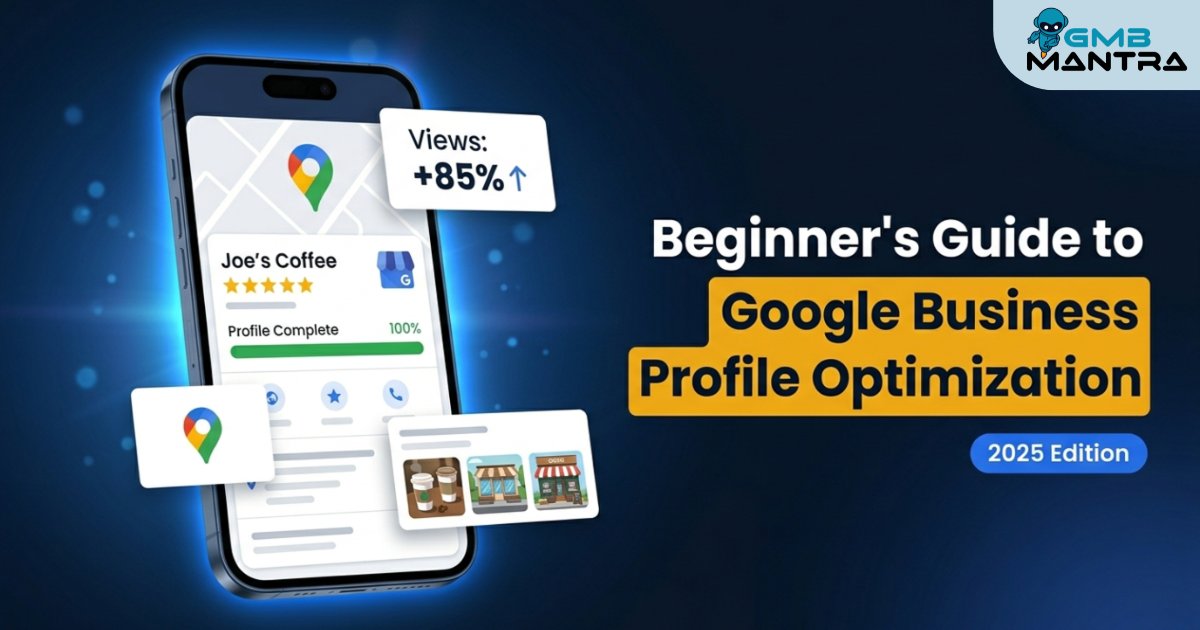
Beginner's Guide to Google Business Profile Optimization
Meta Description: Your Google Business Profile is bleeding leads. Fix NAP consistency, category selection, and ghost edits with this practitioner-tested optimization guide. Get the breakdown.
I was staring at a client's GBP Insights tab last quarter—discovery searches at 94%, direct at 6%. That's a vanity metric nightmare. It meant almost nobody was searching for them by name. They had a "complete" profile, or so they thought. Turns out, their primary category was wrong, their NAP had three different phone number formats across directories, and Google had ghost-edited their hours from a stale Yelp listing. Three problems, zero visibility in the local pack.
I've run enough profile audits at this point to know that most GBP issues aren't mysterious. They're structural. And they're fixable—if you know where to look.
Here's the promise: By the end of this guide, you'll be able to audit, optimize, and maintain your Google Business Profile so it ranks in the local pack, resists ghost edits, and actually generates leads instead of just impressions.
What You Need Before Touching Your Profile
Before you change a single field, get these locked down:
- Access to your GBP Dashboard with Owner-level permissions
- A list of your top 10 local competitors (search your money keyword on Maps, incognito)
- Your exact NAP (Name, Address, Phone) as it appears on your website, invoices, and domain registration
- A category spy tool like GMB Everywhere or a manual competitor audit spreadsheet
- UTM builder for tracking link clicks from your profile
Stop/Go test: Can you state your primary service and the exact city you serve in one sentence? If not, stop. Clarify that first—it drives every optimization decision downstream.
Phase 1: Claim, Verify, and Nail the Foundations
Steps:
- Search your business on Google Maps. If an unclaimed listing exists, claim it through the GBP dashboard. If nothing shows, create a new profile.
- Complete verification. Postcard is still the most common method, though phone and email options appear for some categories.
- Enter your business name exactly as your legal branding. No keyword stuffing. Businesses with keyword-stuffed names face suspension at a rate of 20-30%, and the reinstatement process is painful.
- Input your NAP. Test it against 5 directories right now—Google My Business, Yelp, Bing Places, Apple Maps, and your Chamber of Commerce listing. One variance and Google can suppress your local pack ranking.
Visual Checkpoint: You should see a green "Verified" badge on your dashboard. Your completeness score should read 100% for the basics section, and the "Suggestions" tab should have zero pending items for name, address, or phone.
Verification: Search your exact business name in incognito mode on Google Maps. Your listing should appear with the verified badge and correct NAP. If it doesn't, your citation management needs immediate attention.
Honestly, this phase trips up more businesses than any other. I've seen franchises with 15 locations where every single one had a slightly different phone format. That kind of NAP discrepancy doesn't just hurt rankings—it can trigger full GBP suspension.
Phase 2: Category Selection and Service Structure
This is where most guides get lazy. They'll tell you to "pick the right category." Cool. Which one?
Steps:
- Open Maps incognito. Search your primary money keyword (e.g., "emergency plumber Austin").
- Click on the top 3 local pack results. Note their primary category.
- If 2 out of 3 share the same primary category, that's yours. Your primary category locks in roughly 80% of your local relevance signal.
- Add 5-10 secondary categories that cover your long-tail services without diluting the core signal.
- Under the Services tab, write structured service data as short, declarative sentences. Not paragraphs. Not keyword lists. Sentences. This is how Gemini parses your profile for AI visibility in overviews.
Visual Checkpoint: Your category stack should mirror your top competitors when you run a competitor audit. Your services section should show individual service items with descriptions—not a blank or a wall of text.
Verification: Compare your primary and secondary categories against the top 10 Maps results for your keyword. If there's a mismatch, swap immediately.
A friction warning here: Google sometimes suggests categories that sound right but are actually parent categories with low search volume. "Consultant" vs. "Business Management Consultant"—the difference in local pack visibility is massive. Don't guess. Spy.
> Tired of manually auditing competitor categories one by one?GMBMantra's competitor analysis dashboard pulls category stacks, posting frequency, and review velocity for your local competitors into a single view—so you can stop tab-switching and start optimizing.
Phase 3: Photos, Posts, and the Freshness Engine
Incomplete profiles reduce visibility by 50-70%. And the biggest culprit after NAP issues? Stale content.
Steps:
- Upload a minimum of 20 photos. Team photos, storefront, interior, work-in-progress shots. No stock images. Geo-tag them with your city metadata before uploading.
- Set a weekly post schedule. Use a mix of updates, offers, and event posts. Seasonal hooks perform better than generic "We're open!" posts.
- Reply to every review within 24 hours. Review recency beats volume for responsiveness signals. A profile with 200 reviews but no replies in 60 days loses to a profile with 40 reviews and daily owner responses.
Visual Checkpoint: Your photo carousel should show 20+ recent uploads. Your latest post should be dated within 7 days. Your review feed should show owner replies on the most recent 10+ reviews.
Verification: Check your Insights tab. If your views-to-actions ratio is above 5% and direct searches exceed 20% of total, you're on track. If discovery searches dominate, your branding—and likely your photo management and post scheduling—need work.
Businesses with fewer than 10 photos see roughly 40% lower engagement. That's not a rounding error. That's half your potential leads gone because you didn't upload pictures of your actual workspace.
Phase 4: Q&A, Attributes, and AI-Proofing
Steps:
- Preempt your Q&A section. Write and self-answer the top 5 questions customers ask. Use keyword-rich answers—these rank in zero-click SERPs.
- Add every relevant attribute. "Veteran-led," "women-owned," "wheelchair accessible"—these filter into specialized local packs.
- Implement LocalBusiness schema on your website. This syncs with your GBP and acts as Google's official script for voice queries. Voice searches now account for 65%+ of mobile queries, and they pull from structured data first.
Verification: Search a question format of your service ("Does \[business\] offer \[service\]?"). If your Q&A answer appears, you're winning. If a competitor has answered on your listing, you've been hijacked—fix it now.
The Ugly Truth: Ghost Errors That Kill Rankings
Here's the stuff Google's help docs won't tell you.
Problem
The Weird Fix
Source
Profile invisible in local pack
Force re-verify via postcard + bulk directory cleanup
GBP Community Forums
Hours/services auto-changing
Google pulls from outdated Yelp data—set alerts, revert weekly, report source
Practitioner benchmarks
Suspension without warning
Rename to exact legal branding, appeal with NAP proof from 10+ directories
GBP Help
No AI Overview mentions
Rewrite service data as short sentences + add FAQ schema to site
Optimization guides
Rankings dropping after plateau
No weekly posts or photos—schedule auto-posts with seasonal hooks
Rank tracking data
70% of unmonitored GBPs suffer ghost edits that silently drop rankings. That's not a small number. That's most profiles.
> Ghost edits are the silent killer of local rankings.GMBMantra's profile audit and monitoring tools flag unauthorized changes to your GBP in real-time—so you catch auto-edits from third-party sources before they tank your visibility. Plus, its post scheduling and review response automation handle the freshness signals that most businesses let decay.
How long does Google Business Profile optimization take to show results?
Foundations (claim, verify, NAP) take 1-7 days. Content build with photos and services shows long-tail appearances in 2-4 weeks. Consistent posting and review management compounds into top local pack positioning over 3-6 months. Schema-driven AI visibility takes 4-8 weeks post-implementation.
Why is my GBP not showing in the local pack even after verification?
Incomplete fields or a primary category mismatch are the usual culprits. Run a competitor analysis on Maps, audit your NAP across directories, and ensure your completeness score is 100%. Force re-verification if suppression persists after corrections.
How do I fix ghost edits overwriting my business information?
Enable change alerts in your GBP dashboard, revert unauthorized edits immediately, and clean the third-party source Google pulled from. Weekly monitoring through a dedicated profile audit tool is the only reliable prevention.
Can I optimize my GBP for AI Overviews and voice search?
Yes. Write structured service descriptions as declarative sentences, implement LocalBusiness schema on your website, and preempt Q&A with keyword-rich owner answers. AI-ready local SEO tools can help structure this data for Gemini's parsing.
Your GBP isn't a "set it and forget it" asset. It's a living profile that Google, your competitors, and third-party data sources are constantly pulling at. The businesses that win the local pack aren't the ones with the best product—they're the ones running weekly rank tracking, cleaning citations, and treating their profile like a revenue channel. So the real question is: when's the last time you actually looked at yours?