The Biggest Challenges of Multi-Location Local SEO (And Proven Solutions)
I was staring at a rank tracking dashboard last Tuesday, watching three of our client's twelve locations slowly bleed out of the local pack—while the flagship store sat comfortably at position one. Same brand, same services, nearly identical optimization. And yet Google treated those branches like they barely existed.
That's multi-location local SEO in a nutshell. It's not one problem. It's the same problem multiplied by every location you manage, with each one quietly developing its own set of issues you won't catch until rankings tank.
By the end of this guide, you'll have a phase-by-phase system to diagnose and fix the most common multi-location local SEO failures—plus the local SEO tools and workflows that actually prevent them from recurring.
Before You Start: The Pre-Flight Check
You need a few things locked down before any of this advice is useful:
- Access to every Google Business Profile across all locations (not a shared login—individual owner/manager access per location).
- A citation management tool (Whitespark, Moz Local, or similar) that can audit all directories simultaneously.
- A rank tracking setup configured per location, not just per domain.
- A clear internal linking architecture connecting your location pages to service pages and your homepage.
Stop/Go test: Can you pull up every location's GBP verification status, citation consistency score, and mobile page speed in under ten minutes? If not, fix your tooling first.
Phase 1: Fix NAP Consistency Before Anything Else
Here's where most multi-location projects go sideways before they even start. Businesses audit their top 10 directories, see everything looks fine, and move on. Meanwhile, 40+ secondary listings—data aggregators, niche directories, old Yelp pages—are broadcasting conflicting phone numbers and outdated addresses.
What to do:
- Run a full citation audit across every location using your citation management platform. Don't just check Google, Bing, and Facebook. Pull Yelp, Apple Maps, Foursquare, and every data aggregator.
- Flag any location scoring below 95% consistency.
- Submit corrections in bulk. Prioritize Apple Maps and Yelp—Google cross-references these heavily.
Visual checkpoint: Your citation management dashboard should show each location at 95%+ consistency with zero conflicting phone numbers or address format mismatches.
Verification: Manually search each location's exact NAP on Google. If an old address or phone number surfaces in any result, you've still got a problem.
The friction here? Secondary directories are slow to update. Some take 8–12 weeks. You'll think nothing happened. It did—you just have to wait. A 95%+ citation consistency score is the baseline; anything lower and you're feeding Google conflicting signals that directly suppress local pack visibility.
Phase 2: Build Location Pages That Don't Look Like Templates
Template decay is real, and it's sneaky. You launch 15 location pages from the same template, swap out city names, and rankings look decent for a month or two. Then they plateau. Hard.
The reason? Google detects near-duplicate content—even at 70% similarity—and starts treating your location pages as low-value. Competitor analysis will show you that the businesses outranking you have pages with authentic local context: staff photos, neighborhood-specific testimonials, community event mentions.
What to do:
- Rewrite service descriptions for each location with genuine local context. "Serving downtown Austin since 2018" hits differently than a generic blurb with a city name swapped in.
- Add 3–5 staff headshots with real names per location page. This is a trust signal that stock photos can't replicate.
- Include location-specific FAQs. What questions does a customer in that neighborhood actually ask?
- Implement LocalBusiness schema markup on every single location page. Validate each one using Google's Rich Results Test—you should see green checkmarks for every structured data field.
Visual checkpoint: Each location page should display unique staff photos, neighborhood-specific testimonials, and a schema validation showing zero errors.
Verification: Run a site-level duplicate content check. If any two location pages share more than 30% identical copy, rewrite.
Don't skip the internal linking piece either. Most multi-location sites bury location pages three clicks deep. Link them from your main navigation, from relevant service pages, and from each other where it makes geographic sense. That internal linking architecture is how you distribute authority across locations instead of hoarding it at the flagship.
Phase 3: Fix the GBP Gaps That Kill Branch Rankings
Your main location probably has a fully optimized Google Business Profile—verified, 50+ photos, hundreds of reviews. Now look at your third or fourth location. Half-filled "About" section? Six photos from 2021? Twelve reviews?
That's the review generation failure I see constantly. Businesses pour review generation energy into their best-performing locations and neglect the ones that actually need it.
What to do:
- Verify each location individually. If any branch is still pending, use physical mail verification—phone and email verification can fail silently on secondary locations.
- Complete every GBP field for every location. Each profile needs 10+ current photos, complete hours, a 250+ character unique description, and active posting.
- Build a review generation system that distributes effort proportionally. Underperforming locations should get more attention, not less.
Visual checkpoint: Every location's GBP displays a green "Verified" badge, 10+ photos, and a complete "About" section.
Verification: Search "\[your business\] in \[city\]" for each location. If any branch doesn't appear in the top 3 map results, its profile still needs work.
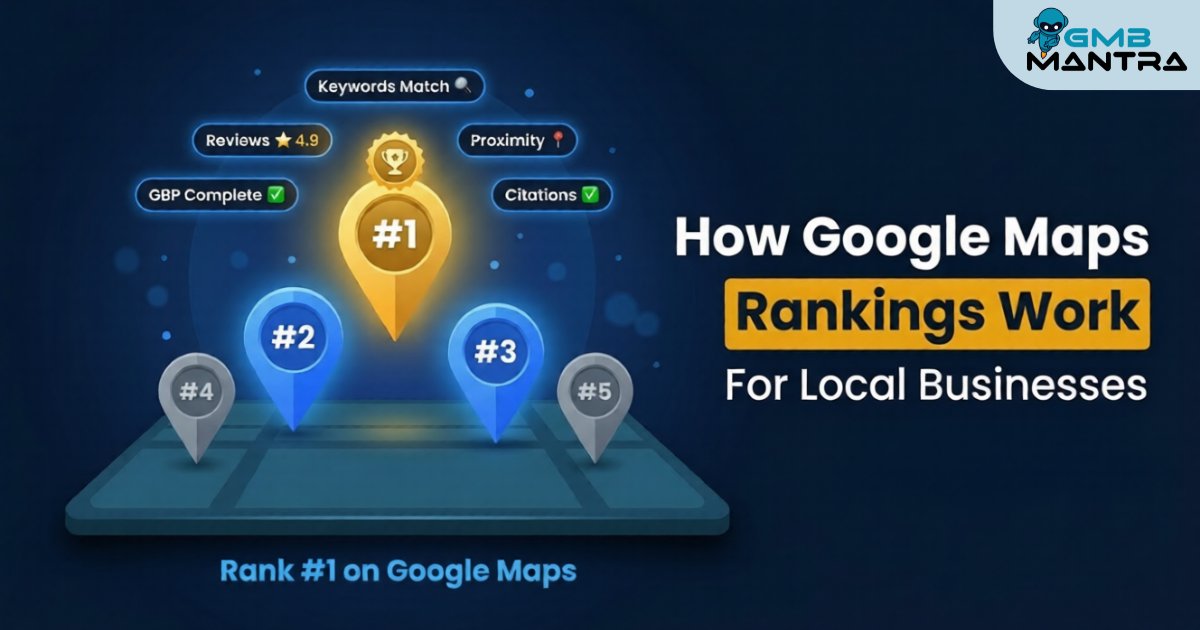
Here's something rank tracking will reveal that gut instinct won't: proximity signals now dominate local results. A competitor two miles closer to the searcher will outrank you even with weaker optimization. You can't fight physics—but you can make sure every other signal (reviews, citations, page quality) is maxed out so you win when proximity is neutral.
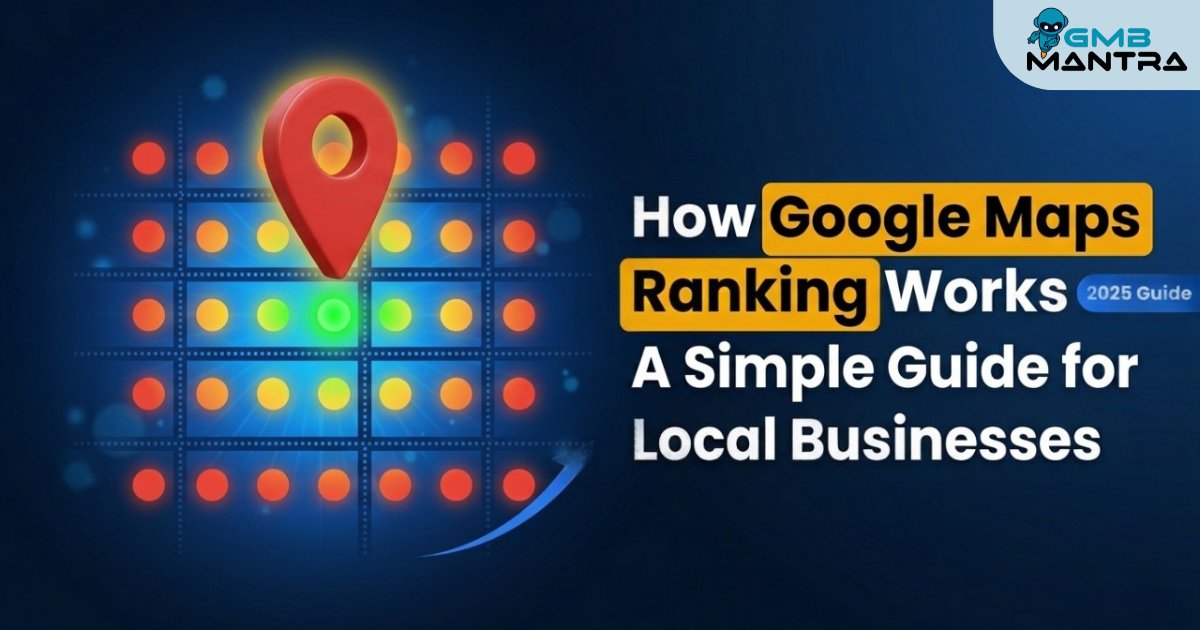
> Manage All Your Locations From One Dashboard If you're juggling GBP profiles across multiple locations—posting, responding to reviews, tracking performance—doing it manually doesn't scale. GMBMantra automates review responses with sentiment analysis, schedules posts across all locations, and gives you keyword heatmaps so you can see exactly where each branch is visible. We built it specifically for this problem.
Phase 4: Don't Ignore Mobile Speed on Location Pages
This one's unglamorous but it's a silent killer. Location pages almost always load slower than your homepage because of embedded Google Maps, review widgets, and unoptimized hero images. And 70%+ of local searches happen on mobile.
Lazy-load your maps and review widgets. Test every location page on a simulated 3G connection. Google PageSpeed Insights should show 75+ on mobile for each page. If it doesn't, you're losing visitors before they even see your content.
The "Ugly Truth" Troubleshooting Table
Problem
The Weird Fix
Why It Works
Branch locations invisible in local pack
Verify each via physical mail using separate Google accounts
Phone/email verification fails silently; mail forces confirmation
Location pages rank but zero conversions
Add real staff headshots, local event photos, neighborhood testimonials
Searchers need proof of genuine local presence
Rankings inconsistent across locations
Audit ALL citations monthly via Moz Local or Whitespark—prioritize Yelp and Apple Maps
Google cross-references multiple directories; one bad citation triggers drops
New location pages don't rank for 6+ months
Build 5–10 local backlinks before launch—pitch chamber of commerce, local news
Internal links alone can't overcome zero local authority
Mobile traffic drops after redesign
Lazy-load maps and widgets; test on 3G
Mobile users abandon pages when maps load before content
AI-driven search summaries skip your locations
Structure content for direct answers, not just traditional featured snippets
AI summaries cite sources differently than organic results
FAQ
How long does it take for multi-location SEO fixes to show results?
Citation corrections typically take 8–12 weeks to propagate across directories. New location pages without local backlinks may not rank competitively for 6+ months. GBP profile improvements can impact local pack rankings within 2–4 weeks if verification and completeness are addressed simultaneously.
What's the most common mistake in multi-location competitor analysis?
Comparing your weakest locations against competitors' flagship stores. Run competitor analysis at the branch level—compare each of your locations against the businesses ranking in that specific local pack. The gaps are always different by location.
Can one tool handle citation management and rank tracking together?
Some platforms bundle both, but accuracy varies. Use dedicated local SEO tools for GBP management and review automation, and pair them with a specialized citation management and rank tracking stack for the most reliable data.
Do service area pages work for businesses without physical locations in every market?
Yes, but they require "serving" language instead of physical addresses, unique local content per page, and geo-targeting signals like area-specific testimonials and backlinks. Without those, they'll read as thin doorway pages to Google.
Multi-location local SEO isn't a "set it and forget it" project. It's an ongoing system of audits, local content investment, and per-location attention that most businesses underestimate. Start with your weakest branch—not your strongest. That's where the real gains are hiding.
> Ready to streamline your multi-location workflow? GMBMantra gives you one dashboard to manage every profile, automate reviews, and track local performance across all your locations.