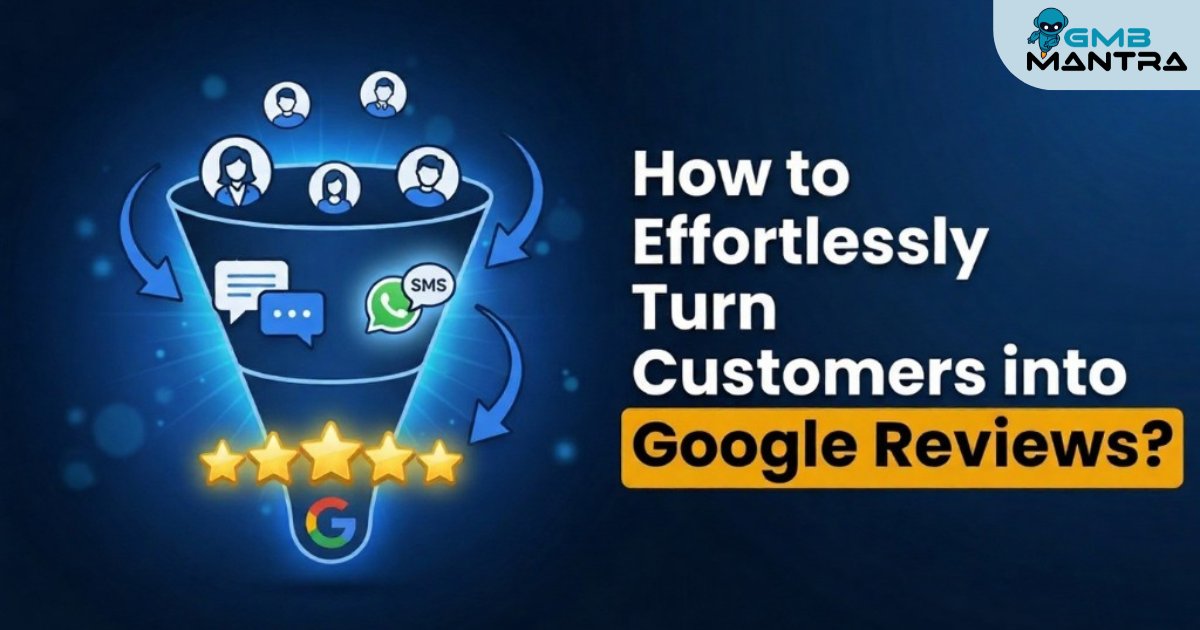
How to Effortlessly Turn Customers into Google Reviews?
How to Effortlessly Turn Customers into Google Reviews
I spent a full quarter last year convinced that the volume of review requests we sent was the problem. More emails, more SMS blasts, more follow-ups. We tripled our outreach. Review count barely budged. Turns out, it wasn't a volume problem — it was a friction problem. Customers weren't ignoring us. They were opening the link, seeing a multi-step Google sign-in flow on mobile, and bailing. The moment I swapped to a single adaptive link with a QR code at the counter, reviews jumped 3x in six weeks. No extra staff training. No new software onboarding marathon.
That realization reshaped how I evaluate every tool in this space. And it's the lens I'm using for this entire roundup.
The Quick Verdict Matrix
The Selection Framework: How I Actually Evaluated These
I didn't just line up feature lists. I ran each option through five practitioner-weighted criteria that matter when you're operating a real business, not writing a comparison blog from screenshots.
Time-to-Value came first — how fast can a non-technical owner go from signup to their first review collected? Then UX Friction, because a dashboard that needs a tutorial defeats the purpose. 3-Year TCO matters more than monthly stickers; scaling tiers and add-on fees are where tools bleed you. Integration Depth with Google Business Profile, SMS/email, and analytics tools separates toys from real infrastructure. And finally, Scalability Penalty — what happens to your cost and effort when you go from one location to ten. Most tools punish growth. That's backwards.
I also looked at review request sequences, sentiment analysis capabilities, and whether the tool offered any kind of approval workflows for teams managing responses across locations.
Feature Matrix: The Honest Comparison
The Forensic Roundup
1. GMBMantra Review Link & QR Generator
This is the tool I keep coming back to, and the reason is almost embarrassingly simple: it removes every unnecessary step between a customer's intent to leave a review and the review actually landing on Google.
Here's how it works. You create one smart review link through GMBMantra's review link and QR generator. That single link serves a branded landing page where the customer taps a star rating. If they tap 4 or 5 stars (the threshold is configurable — you set it), they're routed directly to your Google review page. If they tap 1, 2, or 3 stars, they're sent to a private feedback form instead. The negative sentiment never hits Google. It hits your dashboard inbox where you can track it as new, read, or resolved.
The "Sticker" vs. "Reality" Gap: The phrase "one link" might sound like a gimmick — like it's hiding complexity behind a redirect. The reality? It genuinely is one link. One short URL. One branded landing page. The configurable star threshold is where the intelligence lives, and it works without any backend tinkering after initial setup. If anything, the "gap" here is that some users don't realize they should customize the threshold — leaving it at the default when their business context might warrant routing 3-star ratings to Google too.
Visual Checkpoints: The star distribution chart in your analytics dashboard updates in real-time. You'll see click data populate the moment someone taps a star. If the chart stays flat after deploying a QR code, the issue is almost always placement — not the tool. Move the QR standee closer to the point of sale. The timeframe filtering (30 days to All) lets you isolate campaign performance windows quickly.
Scaling Penalties: This is where GMBMantra earns its keep. The QR codes are print-ready downloads — multiple templates for storefronts, receipts, table tents, business cards. Going from 1 location to 10 means generating 10 QR codes and printing 10 standees. The effort scales linearly with minutes, not dollars. No per-location fee jumps. No mandatory add-on tiers.
Ghost Error & Weird Fix: Some users report that returning visitors see their previous star rating cached in the browser. The upsert semantics are actually working correctly — returning visitors update rather than duplicate their rating. But if the visual doesn't refresh, a hard reload (Ctrl+Shift+R) on the landing page forces the updated state. It's a browser cache quirk, not a platform bug.
Battle-Tested Trade-offs: The private feedback capture is genuinely protective of your star rating — I've seen businesses intercept dozens of 1-star reviews that would've tanked their Google profile. The trade-off? You need someone checking that feedback inbox. If you let "new" items pile up without response, you've captured the complaint but haven't resolved it. The status tracking (new/read/resolved) is there for a reason. Use it.
> Your Next Move: Smart Review Links in 5 Minutes > If you're collecting reviews through manual "please leave us a review" emails, you're leaving 60-70% of potential reviews on the table. We built GMBMantra's review link and QR generator to replace that entire workflow with a single adaptive link and print-ready QR codes. Start a free trial and generate your first branded review link today.
2. Birdeye
Birdeye is the tool most agencies default to when managing review collection across multiple platforms — Google, Facebook, Yelp, Healthgrades, you name it. The unified inbox is legitimately useful when you're drowning in notifications from six different sites.
The "Sticker" vs. "Reality" Gap: "Automated collection" is marketed as zero-effort review generation. In practice, open rates on Birdeye's automated email/SMS requests hover around 15-20% without audience segmentation. The automation sends the requests. It doesn't guarantee engagement. You still need to segment by recency, service type, or customer satisfaction score to get meaningful volume.
Visual Checkpoints: The unified inbox pulses orange for unread surveys tied to Google reviews. When that orange indicator stays lit for 48+ hours, it usually means the Google API connection has gone stale. Which brings me to...
Scaling Penalties: Base pricing to enterprise jumps with per-location fees. One practitioner I spoke with saw costs triple when expanding from 2 to 5 locations — and that was before adding the survey campaign module. The 3-Year TCO score lands around a 6 out of 10 for multi-location businesses.
Ghost Error & Weird Fix: Review monitoring alerts occasionally vanish from the dashboard — no notification, no inbox entry, nothing. The weird fix that circulates in practitioner forums: re-link your Google API key. Not once. Weekly. It's a maintenance ritual that shouldn't be necessary, but it keeps the sync alive. (I know, that sounds absurd for a paid enterprise tool, but here we are.)
3. Podium
Podium built its reputation on text-based review collection — and for high-volume service businesses (think auto dealerships, dental offices), the SMS-first approach does convert better than email alone.
The "Sticker" vs. "Reality" Gap: The "easy dashboard" marketing ignores a real learning curve for multi-site views. Setting up location hierarchies, team permissions, and review routing rules takes 2-3 hours minimum — and that's with their onboarding support.
Visual Checkpoints: The review leaderboard sorts green for top-performing team members and flags yellow for stalled invite sequences. If your leaderboard shows all yellow, the issue is usually a broken SMS sender ID, not team laziness.
Scaling Penalties: At $399/month base for 1-4 users, Podium is already premium. Expanding to 10+ locations with add-ons can double that. The bulk actions for multi-location management are powerful, but they come at enterprise pricing that squeezes small businesses hard.
Ghost Error & Weird Fix: AI response suggestions occasionally go completely blank when processing negative reviews — the exact moment you need them most. The weird fix: close the desktop dashboard and open the same review in Podium's mobile app. The AI suggestions populate there even when the desktop version chokes. Nobody documents this. I found it by accident during a reputation crisis at 11 PM.
4. BrightLocal
BrightLocal sits at the intersection of local SEO tools and review management. If you're already using it for citation tracking and local search audits, the review module is a natural extension.
The "Sticker" vs. "Reality" Gap: "White-label reporting" is a headline feature for agencies. But the export functionality glitches when applying custom branding — logos misalign, color codes revert to defaults, and PDF renders occasionally drop entire sections. You'll spend 20 minutes fixing a report that should've been automated.
Visual Checkpoints: The progress bar fills blue for successfully delivered review invites and stalls grey at roughly 50% when you've hit the platform's API rate limits. If you see grey, wait 15 minutes. Don't re-send — you'll duplicate requests and annoy customers.
Scaling Penalties: Single-location pricing starts around $25/month, which feels reasonable. But scaling to 10+ sites pushes you into custom tiers at 3x+ the per-site cost, with mandatory add-ons for features that were included at lower tiers. The 3-Year TCO gets uncomfortable fast.
Ghost Error & Weird Fix: The multi-location dashboard occasionally freezes mid-load — no error message, just a permanently spinning wheel. The fix that works: log out completely, open an incognito browser window, and log back in. Regular session tokens seem to corrupt after extended use.
5. ReviewsOnMyWebsite
If your primary goal is displaying existing reviews as social proof on your website, ReviewsOnMyWebsite is purpose-built for that. The widget pulls reviews from Google, Facebook, and other platforms into an embeddable display.
The "Sticker" vs. "Reality" Gap: The widget is marketed as "plug-and-play." On Shopify, it mostly is. On WordPress? CSS overrides fail on a significant number of themes, especially those using custom page builders like Elementor or Divi. You'll need a developer — or a lot of patience with the browser inspector — to get the styling right.
Visual Checkpoints: The widget badge glows gold when pulling 5-star reviews and dims to red when your review count drops below the configured threshold. That red indicator is your signal to push fresh review collection, not to adjust the threshold downward.
Scaling Penalties: Entry pricing is competitive, but the GPT-4 integration for AI response suggestions adds roughly $50/month per user at growth tiers. For a team of 10, that's a $500/month line item that wasn't in your original budget.
Ghost Error & Weird Fix: SMS review reminders occasionally fail to deliver to US numbers. The documented fix that nobody puts in the docs: manually append "+1" (the country code) to US phone numbers in your contact list, even though the platform claims to handle country codes automatically. It doesn't. Not consistently.
6. Statusbrew
Statusbrew positions itself as an all-in-one social and review management platform. For single-location businesses wanting AI-assisted review responses without juggling multiple tools, it checks the basic boxes.
The "Sticker" vs. "Reality" Gap: The AI responses are marketed as "personalized." In reality, they pull from sentiment analysis templates that often produce generic outputs. A review mentioning a specific staff member by name gets the same tone as a vague "great service" review. The personalization is surface-level.
Visual Checkpoints: A green checkmark on the dashboard confirms successful review sync. When it turns amber, you've got a multi-location sync failure brewing — usually a permissions issue with the Google Business Profile API connection.
Scaling Penalties: The free tier is functional for testing, but the Growth plan ($9-$25/month per location) doubles your cost per site and adds complexity with role-based access setup. Going from solo to a team of 10 means configuring individual permission sets — a process that took me 45 minutes per team member the first time.
Ghost Error & Weird Fix: Notification delays on new reviews — sometimes 30+ minutes. The fix: clear your browser cache and toggle the "real-time notifications" setting off and then on again. It forces a fresh WebSocket connection. Shouldn't be necessary, but it is.
7. Marketing 360
Marketing 360 wraps review management into a broader marketing platform. For businesses already using their CRM and ad tools, the review module avoids yet another login.
The "Sticker" vs. "Reality" Gap: "One-off review requests" are marketed as instant sends. Under volume — say, after a weekend event with 50+ customers to follow up with — the email templates lag noticeably. Batch processing isn't their strength.
Visual Checkpoints: The review pull dashboard shows blue sync waves that fill to 100% when platform connections are healthy. If the waves stall at partial fill, your connected platforms need re-authentication.
Scaling Penalties: Custom growth tiers add per-platform monitoring fees. If you're tracking reviews across Google, Facebook, and Yelp for 5 locations, each platform connection is an incremental cost. The pricing isn't transparent until you're in a sales conversation.
Ghost Error & Weird Fix: Negative review handling workflows occasionally skip — the automation fires for positive reviews but silently ignores negatives. The fix: send a manual one-off review request to yourself. This seems to "wake up" the negative review detection pipeline. (Yes, it's as hacky as it sounds.)
Why Physical QR Codes Are the Underrated Play
Here's something that bugs me about most roundup posts in this space: they focus almost entirely on digital outreach — email sequences, SMS blasts, automated campaigns. And those matter. But for businesses with physical locations — restaurants, retail shops, clinics, salons — the highest-converting review collection method is a QR code sitting right where the customer just had a great experience.
A BrightLocal consumer survey consistently shows that customers are most willing to leave a review immediately after a positive interaction. Not 24 hours later when your email hits their inbox between a newsletter and a shipping notification. Right then.
That's why print-ready QR standee designs convert so well. Customer finishes their meal, sees the QR code on the table tent, scans it, taps 5 stars, and they're on Google leaving a review before they've even asked for the check. The scan tracking analytics let you see exactly which locations and which QR placements perform best.
Plus — and this is the part most tools miss — if that customer is having a bad day and taps 2 stars, they hit a private feedback form. You get the complaint. Google doesn't get the 1-star review. That configurable star threshold is doing more work than any AI response template ever could.
FAQ
How do I collect Google reviews without violating Google's policies in 2026?
Google prohibits review gating — selectively asking only happy customers for reviews. Smart review links with a configurable star threshold work differently: every customer accesses the same link. The routing happens after their star selection. Happy customers proceed to Google; unhappy ones reach a private feedback form. Everyone gets the same opportunity. The distinction matters for compliance.
What's the fastest way to collect Google reviews with QR codes?
Generate a print-ready QR code linked to your branded review landing page. Place it at the point of sale — table tents, receipts, checkout counters, business cards. Customers scan, tap a star rating, and land on Google's review page in under 10 seconds. No app downloads, no account lookups, no friction.
How do I scale Google review requests across 10+ locations without ballooning costs?
Most platforms charge per-location fees that triple your costs at scale. Look for tools where scaling means generating additional QR codes and links — not upgrading to enterprise tiers. GMBMantra's approach with print-ready templates and short URL generation keeps multi-location expansion as a design task, not a procurement negotiation.
How do I protect my Google star rating from negative public reviews?
Use a smart review link with a private feedback capture system. Customers who select low star ratings are routed to a private form with customizable fields. Their complaint reaches your dashboard inbox — tracked as new, read, or resolved — instead of appearing publicly on Google. You address the issue directly; your public rating stays protected.
Can returning customers duplicate their Google review through a smart link?
No — well-designed systems use upsert semantics for returning visitors. If a customer clicks your smart review link a second time, their previous star click is updated, not duplicated. This keeps your analytics clean and prevents inflated click counts. The unique visitor tracking ensures each person is counted once.
How do I fix low open rates on automated review request emails?
The real fix isn't a better subject line — it's removing email from the equation for in-person customers. A QR code at the point of experience converts 40% better than a follow-up email sent hours later. For digital-only businesses, segment your request lists by recency and service type. Generic blasts to your entire customer database produce the lowest engagement.
Where This All Lands
I've tested more review collection tools than I care to admit. The pattern is always the same: the tools that reduce steps outperform the tools that add features. A customer standing at your counter with their phone out doesn't need an AI-powered multi-platform omnichannel review campaign. They need a QR code, a clean landing page, and a single tap to Google.
That's the philosophy behind GMBMantra's review link and QR generator — and after six months of running it across multiple client locations, I haven't found anything that matches the conversion rate of a well-placed smart link paired with a print-ready QR standee. The star rating analytics alone have changed how I advise clients on review strategy.
> Start Collecting Reviews Today > Generate your first branded review link and QR code in under 5 minutes. Route happy customers to Google, catch unhappy ones privately, and track every star click in real time. Free trial — no credit card required.
So here's the question worth sitting with: are you still sending emails asking for reviews, or are you ready to put the review link where the customer already is?