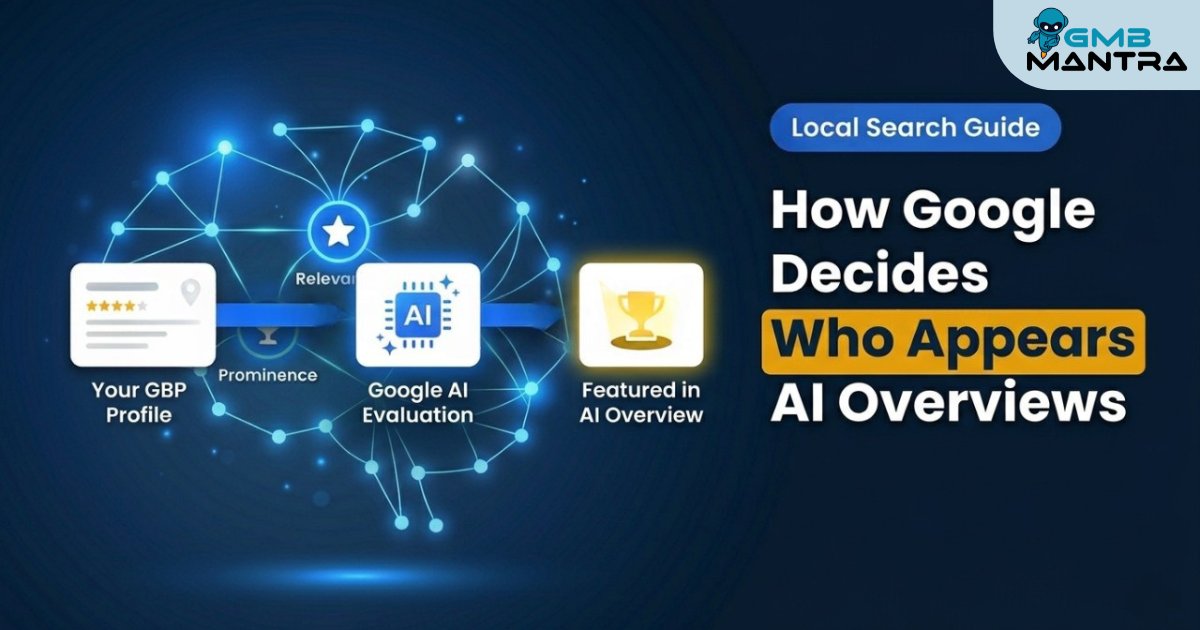
How Google Decides Who Appears in AI Overviews for Local Searches
Have you ever searched for a local service, only to see a competitor appear in Google’s AI-generated summary even though your business has more reviews, a better website, and a fully optimized Google Business Profile? If that’s happened to you, you are not alone. AI Overviews have fundamentally changed the rules of local visibility, and many businesses are being left out not because of poor fundamentals, but because they are optimizing for the wrong signals.
This guide breaks down exactly how Google’s AI selects businesses for AI Overview citations in local searches and gives you a phased, actionable system to earn those placements.
What Are Google AI Overviews and Why They Matter for Local SEO
Google AI Overviews are AI-generated summaries that appear at the top of search results, synthesizing information from multiple sources to answer a user’s query directly. Powered by Google’s Gemini models, they go well beyond traditional featured snippets. To understand how they relate to your Google Business Profile optimization, it helps to think of them as a new “answer layer” that sits above both the Local Pack and organic results.
The scale of this shift is hard to overstate. AI Overviews now appear in over 60% of all Google searches up from just 25% in mid-2024. For local searches specifically, they show up in 23% of all “near me” queries, and for categories like restaurants, that number climbs to 38%.
The stakes for local businesses are significant. Being cited inside an AI Overview delivers 35% more organic clicks than ranking just below it, and businesses featured in AI Overviews see a 43% increase in traffic. Meanwhile, those ranked just below the Overview experience a 23% decline. If you are curious why your GBP is getting views but not calls, AI Overview exclusion is often a hidden contributing factor.
What separates AI Overviews from traditional local ranking is that they operate on fundamentally different logic. Traditional organic ranking rewards domain authority and keyword placement. AI Overviews reward semantic completeness, cross-platform consistency, and trustworthiness. This is why a competitor with fewer reviews can appear above you if their signals are more coherent across the ecosystem Google’s AI is reading.
Pre-Flight Check: Are You Ready to Compete?
Before touching anything, run this quick audit to understand where you stand:
• Search your primary service keyword + city in an incognito window. Are you in the Local Pack top 3?
• Query Google (or Gemini) with your service + city. Are you cited in any AI-generated summary?
• Review your GBP dashboard for owner-level access and confirm all information is complete and verified.
• Run a citation audit across 50+ directories to check NAP (Name, Address, Phone) consistency.
If you fail either of the first two checks, you have real work to do. The four-phase system below is your roadmap. You may also want to cross-reference the complete 2026 GBP optimization checklist as a companion guide.
Phase 1: Nail Relevance Through Primary Category Alignment
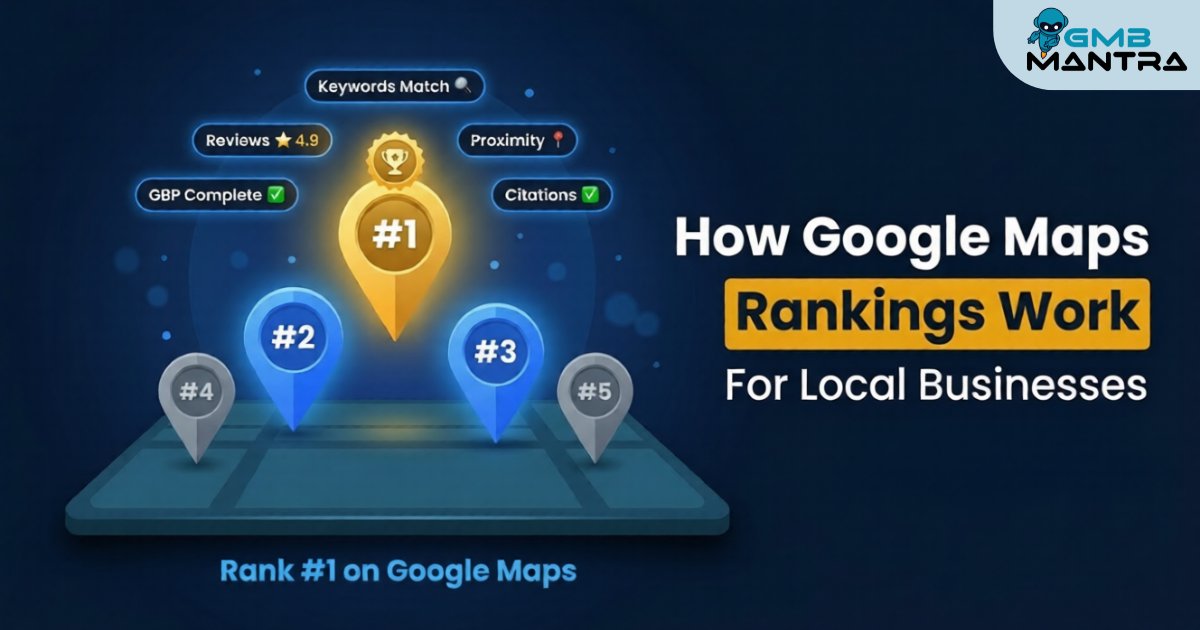
Google’s local algorithm and by extension its AI layer operates on three pillars: relevance, distance, and prominence. Relevance is where most businesses silently fail. GBP signals account for as much as 32% of all map pack ranking factors, and a misaligned primary category is like speaking the wrong language to Google’s AI it cannot confidently match you to relevant queries.
How to Fix Your Category
• Open your GBP dashboard and review your current primary category.
• Test 3–5 alternative categories by searching each one + city in incognito mode. Look at which businesses appear in the AI Overview summary.
• If competitors with weaker profiles are appearing and you are not, your category match is the likely issue. Review the most common GBP mistakes to spot other gaps at the same time.
• Update your primary category and monitor AI Overview inclusion over 2–4 weeks.
The Nuance Most Guides Skip
Google’s AI does not just match categories to queries in isolation it cross-references micro-intent language inside your reviews. If your category says “Auto Repair” but your reviews never mention phrases like “quick oil change” or “same-day brake inspection,” the AI treats your relevance as shallow. Encouraging service-specific language in review requests directly strengthens this signal. Read more about how review analytics reveal hidden revenue opportunities for a deeper look at review text optimization.
The 2026 Whitespark Local Search Ranking Factors report confirms that keywords in GBP services and review text are now among the top-tier signals for local AI visibility. Pair this with a well-structured GBP posts strategy to keep your profile signaling freshness consistently.
Phase 2: Fix NAP Consistency Across the Entire Citation Ecosystem
An estimated 70% of local business profiles have NAP (Name, Address, Phone) inconsistencies across online directories. A single mismatched phone number on Yelp or a different suite number on Yellow Pages quietly erodes your prominence score the very signal Google’s AI uses to determine how trustworthy your business is. This is one of the foundational issues covered in our beginner’s guide to GBP optimization, and it becomes even more critical in the context of AI Overviews.
AI systems do not just rank they verify. Google’s AI cross-references your business identity across structured citations (directories) and unstructured citations (local news, blog mentions, chamber of commerce pages). If those signals conflict, the AI cannot confidently cite you.
What to Do
• Run a full citation audit covering at least 50 directories.
• Fix every mismatch exactly not “close enough.” Name, Address, and Phone must be identical across all listings.
• After directories, hunt for unstructured citations local news, blog posts, community forums and correct any discrepancies there too. See how wrong business info directly hurts your Google rankings.
Phase 3: Build a Review Engine That Feeds Google’s AI
Reviews are no longer just social proof. For AI Overview selection, they are structured data. Google’s AI actively parses review text to assess relevance, sentiment, recency, and geographic specificity and it uses that analysis to determine which businesses to cite.
What the 2026 Data Shows
• Review recency matters: Google favors businesses with reviews from within the past 30 days. Learn more about how review recency impacts your Google ranking.
• Review diversity matters more than volume: Businesses with reviews spread across Google, Yelp, and Apple Maps edge out single-platform volume. This is explored in detail in our post on how reviews influence buying decisions in local search.
• Review sentiment is parsed by AI: Positive sentiment and a star rating above 4.5 are critical thresholds. Why your Google reviews matter more than your website covers the full data behind this shift.
• “Great emergency plumber in Austin” beats “Great service!” for AI parsing because it supplies geo-specific and service-specific intent signals.
Building Your Review Engine
• Set up a systematic review request flow using post-service emails, SMS follow-ups, and QR codes at point of sale. Our guide on 12 strategies to get more Google reviews has a step-by-step framework for this.
• Respond to every review within 48 hours with personalized responses that reference the specific service and location. Use our Google review response templates as a starting point, then customize.
• Diversify your review platform presence. For handling negative feedback, see our guide to responding to negative reviews, and for crisis situations, the 5-step Google review crisis protocol is worth bookmarking.
• Protect your rating from manipulation by knowing how to spot fake reviews before they hurt your business.
Phase 4: Stack E-E-A-T Local Signals and Behavioral Data
E-E-A-T Experience, Expertise, Authoritativeness, and Trustworthiness has a local dimension that most businesses overlook. Fully optimized GBPs with strong E-E-A-T signals are 2.7x more trusted by Google, and AI Overviews cite E-E-A-T-strong sources 3x more often. This overlaps significantly with how AI-powered GBP optimization increases local revenue.
E-E-A-T Local: What It Means in Practice
• Add LocalBusiness schema markup to your website’s service pages. Schema is the structured data layer that Google’s AI can parse without ambiguity.
• Tie author bios on your website to your city and service area. Location-specific authorship reinforces geographic relevance.
• Create dedicated service pages for each offering. The 2026 Whitespark data confirms these ranked first for local organic rankings and second for AI visibility. See what your location pages must include to rank better for a page structure checklist.
• Pursue editorial mentions: “best of” local lists, industry roundups, and local news features. This is especially important for multi-location businesses where individual location authority matters.
Behavioral Signals and Proximity
Proximity is the one factor you cannot fake, but you can optimize around it. Google’s proximity factor is nuanced being the closest business does not always mean ranking first. 80% of local searches happen on mobile, and strong behavioral signals (clicks-to-call, direction requests, website visits from your GBP) signal active customer engagement. This creates a modest but real extension of your effective proximity radius.
In Google Search Console, monitor your local CTR (target 5%+). Watch for “Popular times” data populating in your GBP this confirms behavioral signals are flowing to Google’s systems. Also keep an eye on voice search trends for “near me” queries, which are increasingly AI-driven.
2026 Trends Reshaping Local AI Overview Selection
1. Multimodal Content Is Now a Ranking Signal
Pages combining text, images, video, and structured data see 156% higher AI Overview selection rates compared to text-only content. For local businesses, genuine photo and video content on your GBP and website is no longer optional.
2. Semantic Completeness Outranks Domain Authority
Domain authority’s correlation with AI Overview inclusion has dropped to r=0.18. Semantic completeness the ability of your content to provide a self-contained answer is now the strongest predictor (r=0.87). This is why local SEO and traditional SEO now require different strategies, and why 47% of AI citations come from pages ranking below position #5.
3. Question-Based Queries Are the Highest-Opportunity Window
Queries phrased as questions or how-to searches are 84% more likely to display an AI Overview. Long-tail question queries with 8+ words show the highest trigger rates. Structure your website content and GBP descriptions to answer specific questions your customers are actually asking.
4. Earned Media Multiplies AI Visibility
Distributing content to a wide range of publications can increase AI citations by up to 325% compared to publishing only on your own site. For local businesses, this means seeking local press coverage and building a presence on forums where Google’s AI is increasingly pulling answers. The local SEO and reputation management connection is directly relevant here.
5. AI Scans for Confidence, Not Just Keywords
Accurate, consistent, and timely data across every touchpoint from your GBP to your website to third-party directories is what earns inclusion. The shift is from “ranking” to “being confidently recommended.” This is the core insight behind how Google Maps is becoming the new search engine in 2026.
Frequently Asked Questions
How long before GBP changes affect AI Overview visibility?
Relevance changes like category and description updates typically surface in 1–4 weeks. Prominence signals such as reviews and citations compound over 3–6 months. Consistent AI Overview inclusion usually takes 6–9 months of sustained optimization. See the complete GBP guide for a full breakdown of how each signal type compounds over time.
Why does my competitor appear in AI Overviews with fewer reviews?
Review diversity and recency outweigh raw volume. A competitor with 40 recent, geo-specific reviews spread across Google and Yelp will typically outperform a business with 200 stale, single-platform reviews. Also check their GBP category alignment — a precisely matched category combined with fresh, keyword-rich reviews is often the winning combination.
Can I track whether AI tools cite my business?
Yes. Query Gemini, ChatGPT, and Perplexity regularly with your service + city keywords. GMBMantra’s rank tracking includes AI citation monitoring alongside traditional Local Pack positions so you can measure progress across both surfaces.
How do I fix NAP inconsistencies across 50+ directories?
Use a citation management platform to bulk-audit and correct listings. Manual fixes cover the top 10 directories, but automated tools are essential for catching the long-tail directories that quietly erode your AI prominence score.
Is having a presence on Apple Maps and Bing actually important?
Yes. Cross-platform presence signals broader authority to Google’s AI. Syncing your data with Apple Maps, Bing Places, and niche directories builds the multi-platform consistency that AI verification protocols reward. Competitor analysis tools can show you where rivals have listings that you are missing.
What is the biggest mistake businesses make with AI Overviews?
Treating AI Overview optimization as a simple extension of traditional SEO. AI Overviews weigh E-E-A-T local signals, review sentiment, and unstructured citations very differently from the classic Local Pack. Businesses that only optimize their GBP without building coherent signals across the broader digital ecosystem consistently get overlooked. Our local SEO and reputation management guide explains how these two disciplines must work together.
Final Thoughts
Google’s AI Overviews are not a separate channel to optimize for they are the outcome of getting every foundational local SEO signal right, consistently, across your entire digital presence. Category alignment, NAP consistency, review quality, E-E-A-T signals, and behavioral data all feed into whether Google’s AI is confident enough to recommend your business.
Start with the incognito test. Query Gemini with your service and city. If you are not showing up, the four-phase roadmap above is your starting point. The businesses building this foundation now will hold significant competitive advantages as AI-driven local discovery continues to expand. If you want a done-for-you approach, explore GMBMantra’s Managed Local SEO Services or view pricing to find the right plan for your business.