What is Local SEO? Complete Guide for US Businesses in 2026
I was staring at a client's Google Business Profile last month—a dentist in Austin with 200+ five-star reviews, perfect hours, beautiful photos—and they weren't showing up in the local map pack. Not even close. Three hours of digging later, I found the culprit: 14 citation mismatches scattered across directories nobody checks anymore. "Ave" vs. "Avenue" on Yelp. A wrong zip code on Apple Maps. That's all it took to tank a $40K/month practice's local visibility.
That's local SEO in 2026. It's not mysterious. It's not magic. But it is brutally unforgiving when you skip the boring stuff.
Here's my promise: By the end of this guide, you'll have a phase-by-phase execution plan to get your US business ranking in the local map pack—with the exact local SEO tools, rank tracking methods, citation management workflows, and competitor analysis tactics that actually move the needle.
Pre-Flight Check: Are You Actually Ready?
Before you touch anything, you need four things locked down:
- A live Google Business Profile with owner-level access
- A master NAP spreadsheet (name, address, phone—formatted identically everywhere)
- Google Search Console connected and collecting data
- Access to local SEO tools like BrightLocal, Moz Local, or GMBMantra's optimization dashboard for citation management and rank tracking
Stop/Go test: Can you right now pull up your GBP and confirm your primary category matches your #1 revenue service? If not, fix that first—everything else builds on it.
Phase 1: GBP Optimization That Actually Matters
Forget the generic "fill out your profile" advice. Here's what the data says: 70% of Google Business Profiles are incomplete, missing photos or hours, and they're essentially invisible in the map pack. Optimized GBPs see 7x more clicks than neglected ones.
Do this now:
- Set your primary category to your exact core service. Stack up to 10 secondary categories matching every service you offer.
- Upload 50+ photos—interior, exterior, team headshots, completed work. Not stock photos. Real ones.
- Write a GBP post with a CTA this week. These expire in 7 days, so you're rotating them weekly from here on out.
- Seed your Q&A section with at least 5 real questions customers actually ask.
Visual Checkpoint: When you search your business name incognito, you should see your profile load with accurate hours, recent photos, a "Recently updated" badge on posts, and gold stars from reviews. If competitors appear above you for your own brand name... we've got problems.
Verification: Search "\[your business\] near me" from a mobile device within your service area. Does your listing appear in the top 3 of the local map pack? That's your baseline.
Friction warning: I've seen businesses stuff their GBP business name with geo-modified keywords like "Best Plumber Tampa FL" and get suspended within 48 hours. Google's cracking down hard on this in 2026. Use your real, legal business name. Period.
Phase 2: Citation Management—The Boring Work That Wins
Here's a stat that should keep you up at night: citation inconsistencies affect 62% of US businesses and cause roughly 25% traffic loss. A quarterly citation audit isn't optional anymore. It's survival.
The execution path:
- Export your master NAP sheet. Every character matters—"Suite 100" vs. "Ste. 100" vs. "#100" creates three different identity signals.
- Run a citation scan across 50+ directories. BrightLocal and Moz Local handle this well. You're looking for a 95% NAP match rate minimum.
- Fix mismatches on the heavy hitters first: Google, Apple Maps, Bing Places, Yelp, Facebook.
- Submit to industry-specific directories (chambers of commerce, professional associations) for prominence signals.
Visual Checkpoint: Your citation scan dashboard should show green across all major directories. Any red flags on Apple Maps or Bing get fixed before you move on—these feed directly into map pack rankings.
Verification: After corrections propagate (give it 2-3 weeks), re-run the scan. If you're below 95% match rate, you've got citation decay happening faster than you're fixing it.
> Automate the Citation Grind Manually tracking NAP consistency across 50+ directories is exactly the kind of work that falls apart at scale. GMBMantra centralizes citation management alongside your GBP optimization, so mismatches get flagged before they tank your rankings.
Phase 3: Rank Tracking With Actual Context
Most businesses check rankings once, feel good or bad, and move on. That's not rank tracking—that's anxiety management.
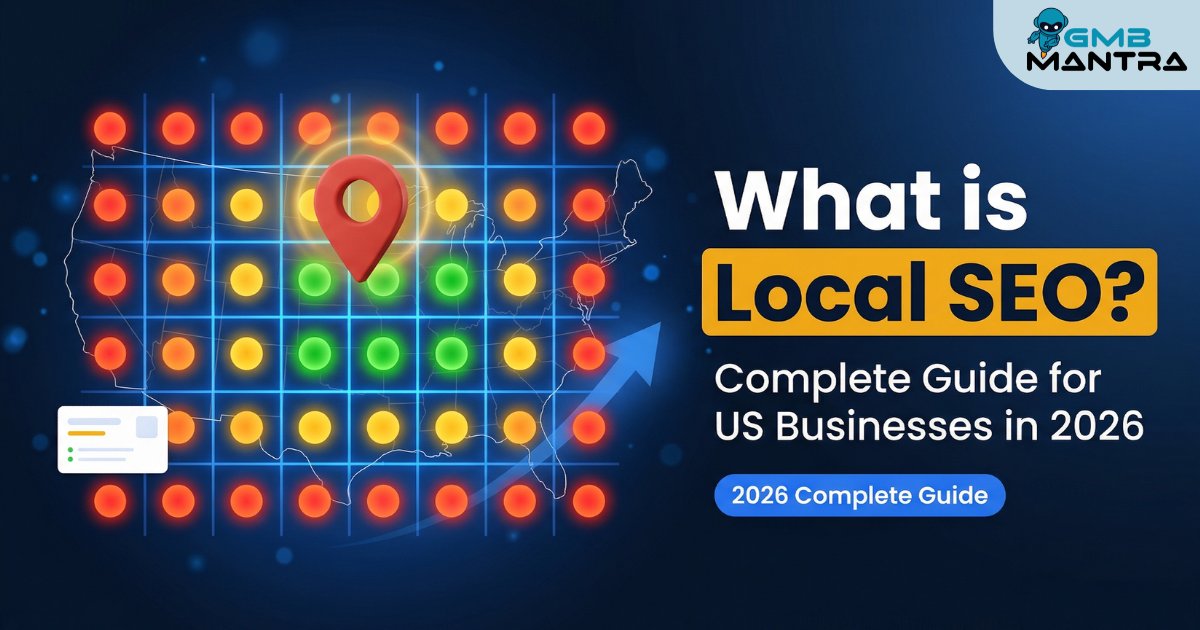
Real rank tracking for local SEO means monitoring your position in the local map pack for geo-modified keywords across multiple zip codes. "Plumber in Tampa" looks completely different from "plumber near me" searched 8 miles away. The proximity factor is real—and it crushes relevance signals once a searcher crosses roughly 5 miles from your location.
What to track:
- Map pack position for your top 10 service + city keyword combinations
- Direction requests in Google Search Console (this is your most honest GBP conversion metric)
- Impression trends on geo-terms—you want 20%+ of impressions coming from local queries
- Review velocity and rating trends month over month
Visual Checkpoint: Your GSC dashboard should show rising impressions and clicks on geo-specific queries, with direction requests climbing steadily. If impressions are up but clicks are flat, your listing's CTR needs work—probably stale photos or missing review schema.
Phase 4: Competitor Analysis That Reveals Gaps
Here's where most guides get lazy. They tell you to "check what competitors are doing." That's useless without a framework.
My competitor analysis process:
- Search your top 3 geo-modified keywords incognito. Screenshot the entire local map pack.
- For each competitor in the top 3, document: review count, review recency, photo count, posting frequency, and categories used.
- Run their domains through Ahrefs or SEMrush to find local backlink sources you're missing—local news sites, sponsorships, chamber pages.
- Check their schema markup using Google's Structured Data Testing tool. If they've got LocalBusiness + Review schema and you don't, that's your CTR gap explained.
Verification: You should have a spreadsheet with clear "they have it, I don't" gaps. Pick the three easiest to close this month.
The Ugly Truth: Ghost Errors Nobody Talks About
Problem | The Weird Fix | Source |
|---|---|---|
GBP vanishes from map pack despite good reviews | Bulk audit citations; force-resubmit Apple Maps first—it feeds other aggregators | BrightLocal community forums |
Rankings drop suddenly after months of stability | Expired GBP posts + stale photos trigger freshness penalties; upload 360° tours and restart posting | Local Search Forum practitioners |
Reviews showing but not influencing pack position | Same-IP review patterns flagged as spam; rotate reviewer devices, respond to all reviews within 24 hours using natural keywords | BrightLocal 2024 study |
AI Overviews completely ignoring your business | Weak E-E-A-T signals; publish hyper-local case studies with named expert authors and proper schema | Google Search Central documentation |
That third one—the review filtering issue—is something I see constantly. A business will run a "review drive," get 30 reviews in a week from the office WiFi, and wonder why prominence didn't budge. 40% of reviews get filtered if patterns look unnatural.
> Stop Flying Blind on Your GBP If tracking posts, reviews, citations, and competitor gaps across separate tools sounds exhausting—it is. GMBMantra pulls rank tracking, review management with AI-powered sentiment analysis, and post scheduling into one dashboard. It's what I point clients toward when they're past the DIY phase.
FAQs
How long does local SEO take to show results?
GBP quick wins (map pack movement) can appear in 2-4 weeks. Citations and audit corrections take 1-3 months. Full local dominance—including AI Overviews—requires 9-18 months of consistent effort. Service area businesses should plan for 6-9 months minimum before expecting stable rankings.
Why isn't my GBP showing in the local map pack?
The most common cause is NAP mismatches across just 5% of your citations. Run a citation audit across 50+ directories, fix formatting inconsistencies, and ensure your primary category matches your core service exactly. Resubmit to Apple Maps first—it feeds major aggregators.
How do I track local SEO performance accurately?
Monitor map pack positions with geo-specific rank tracking, direction requests in GSC, impression share on local queries, and review velocity. A rising direction request count is the most reliable signal that your local SEO is converting.
Can a service area business rank without a physical address?
Yes—but it requires service-specific schema markup, hyper-local landing pages with unique content for each service area, and aggressive citation management. SABs face steeper proximity penalties, so your content and review signals need to work harder.
What's Next
46% of all Google searches have local intent. The map pack drives 44% of clicks. Your competitors who figure out citation management and consistent GBP optimization first will own that real estate—and proximity alone won't save you if their profiles are stronger.
Pick one phase from this guide. Execute it this week. Then check how GMBMantra can automate the rest.